
Exotic mammals in the CaribbeaN
SPECIES STUDIED IN THE PROGRAM
RECENT SCIENTIFIC ARTICLES
Rigorous scientific research is essential to better understand the impacts of non-native species on local biodiversity. It also supports the development of management actions tailored to the species concerned and to the specific characteristics of the environments in which these measures are implemented, while taking into account the socio-cultural context of each territory.
Below is a selection of recent scientific articles related to these topics.
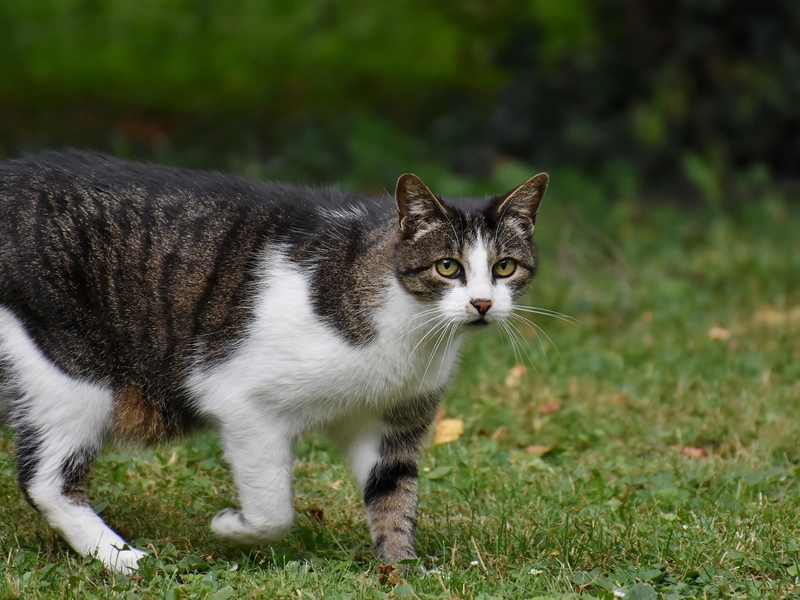
- Galao, A., Soto, E.J, Nunes, J., Pedroso, N.M., Rocha, R., Rato, C. (2025). When pets go wild: Integrating DNA metabarcoding and morphological analyses to investigate the impacts of free-ranging cats (Felis catus) on oceanic islands. Biological Conservation 305: 111089. https://doi.org/10.1016/j.biocon.2025.111089.
Using multiple complementary methods (DNA metabarcoding, morphological analysis of scats, and camera trapping), this study provides a detailed characterization of the diet of free-ranging cats on an oceanic island (Madeira) and highlights extensive predation on native vertebrates, underscoring the potential impact of cats on island biodiversity.
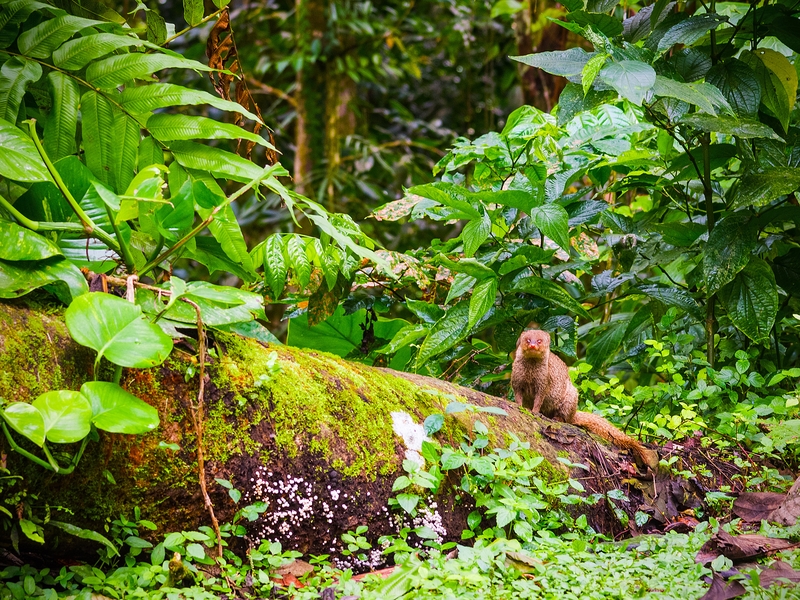
- Angeli, N.F., Lombard, C.D., Brewer, S.D., Hoagland, B., & Hoagland, B. (2025). Regional ubiquity and local control of the invasive Small Indian Mongoose in the Caribbean. Caribbean Journal of Science 55: 31–44. https://doi.org/10.18475/cjos.v55i1.a4
This article shows that the Small Indian Mongoose (Urva auropunctata) is widely distributed across the Caribbean, occupying more than 77% of the region’s land area. Based on a 15-year demographic study conducted on St. Croix (U.S. Virgin Islands), it assesses the effectiveness of a targeted control program for this species.
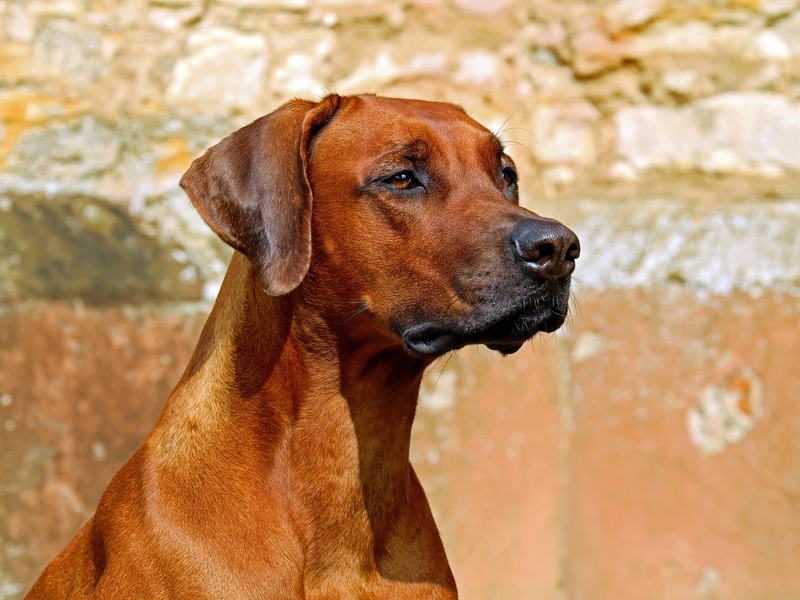
- Yosef, R. (2025). Confronting the challenge: Integrated approaches to mitigate the impact of free-ranging dogs on wildlife conservation. Conservation 5: 29. https://doi.org/10.3390/conservation5030029
This global review synthesizes the ecological impacts of free-ranging dogs on wildlife (including predation, disease transmission, competition, and hybridization) and advocates for integrated management strategies that take ecological, social, and health dimensions into account.
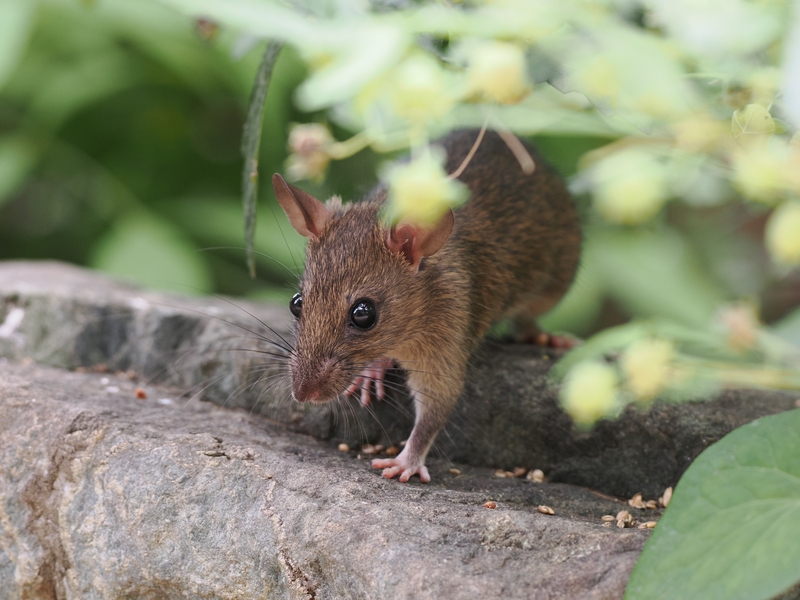
- Birand, A., Gierus, L., Prowse, T.A.A., Cassey, P., & Thomas, P.Q. (2025). Maximising eradication potential of rat gene drives using a two-target homing rescue strategy: Spatial modelling of empirical data. Molecular Ecology 34: e17777. https://doi.org/10.1111/mec.17777
- Choukani, S. (2025). Perception of People Toward Free Roaming Dogs in West Bengal. SSRG International Journal of Humanities and Social Sciences 12(2): 1-8. https://doi.org/10.14445/23942703/IJHSS-V12I2P101
- Kuo, T-H., Chang, G-M., Yu, P-H., Chen, W-H. & Yen, S-H. (2025). The difference in roaming behavior between owned and unowned dogs in a satoyama landscape area. Applied Animal Behaviour Science 283: 106521. https://doi.org/10.1016/j.applanim.2025.106521
- Langlois, T., Hurtrez-Boussès, S. & de Garine-Wichatitsky, M. (2025). Pet and Stray Dogs’ Contribution to Zoonotic Transmission Pathways: A Bibliometric Review. Transboundary and Emerging Diseases. https://doi.org/10.1155/tbed/5522451
- Mahdi, Z., El Bouri, H., Charif, F., Bousgheïri, F., Gourinda, A., Sammoud, K. & Najdi, A. (2025). Policy recommendations for managing stray dogs in Morocco. Eastern Mediterranean Health Journal 31:509–515. https://doi.org/10.26719/2025.31.8.509.
- Mohammadi, A., & Alambeigi, A. (2025). Exploring the behavioral causal chain in free-ranging dogs feeding patterns in southern Iran. Scientific Reports 15: 31340. https://doi.org/10.1038/s41598-025-16616-y
- Hiby, E., Rungpatana, T., Izydorczyk, A., Benka, V., & Rooney, C. (2025). The impact of Catch–Neuter–Vaccinate–Return (CNVR) on Greater Bangkok residents’ attitudes and behaviours towards free-roaming dogs. Animals 15: 1274. https://doi.org/10.3390/ani15091274
- Palmer, A., Willing, L. & McLauchlan, L. (2025). Holding Discomfort: Reducing Polarisation Around Killing for Conservation. Australian Humanities Review 73: 42–70. doi: 10.56449/14685502.
- Tayebwa, D.S., Ssekandi, C., Nalubwama, S., Dankaine, R., Lutebemberwa, I., Rashid, N.K. et al. (2025). Public attitudes, perceptions, and suggested strategies for managing free-roaming dogs in selected urban and rural settings in Uganda. Frontiers in Animal Science 6:1659277. https://doi.org/10.3389/fanim.2025.1659277
- Thichumpa, W., Wiratsudakul, A., Lawpoolsri, S., Limpanont, Y., Thanapongtharm, W., Smith, L.M. et al. (2025) Optimizing dog population control strategies in Thailand using mathematical and economic modeling. PLoS Neglected Tropical Diseases 19: e0013202. https://doi. org/10.1371/journal.pntd.001320
- Willacy, R., Legge, S. & McDonald-Madden, E. (2025). Act for the best, prepare for the worst—Defining strategic mesopredator triggers that safeguard apex predator eradication benefits. Journal of Applied Ecology 62: 458–469. https://doi.org/10.1111/1365-2664.14878